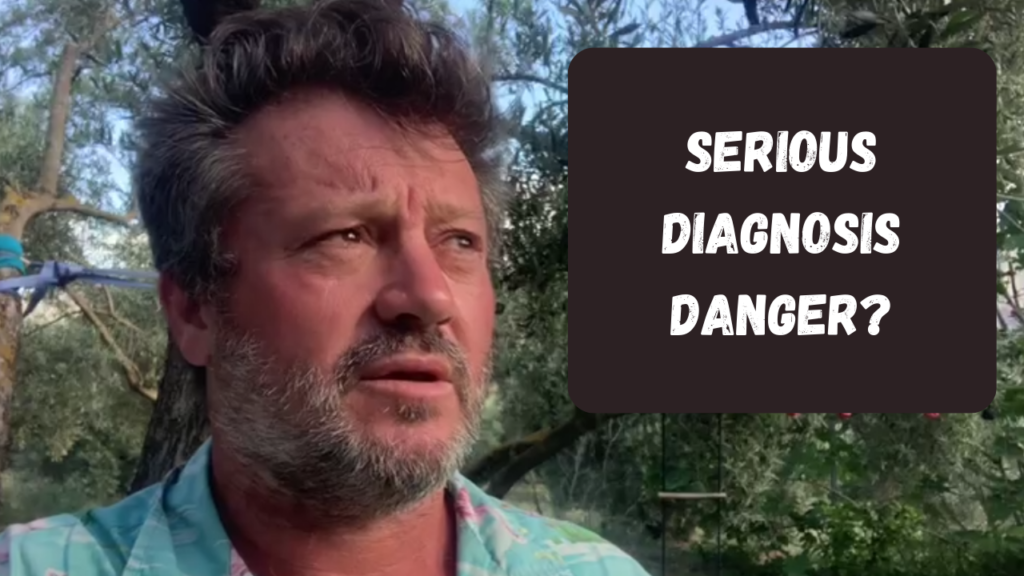
Today I want to talk about something that can create a huge amount of fear and suffering—not necessarily because of the condition itself, but because of what we’re told and our beliefs about what it means to get a serious disease diagnosis, such as cancer, MS or kidney disease.
Now, I’m not saying that you shouldn’t get a diagnosis. Knowledge is power and finding out the medical diagnosis of whatever symptoms you are experiencing gives you very important information about their cause and what you can do to heal.
But, if you are going to have, or have already received a diagnosis, this information is to empower you to see it as useful information, rather than a terrifying shock, which can have all sorts of implications for you and your health.
From a Meta Consciousness perspective, there can be real danger from the psychological shock that comes with being diagnosed.
The fear. The dread. The loss of control.
That can kick off a sequence of biological responses that may be far more disruptive than the original symptoms.
Meta Consciousness recognises that so-called diseases aren’t random errors or malfunctions. They’re intelligent biological adaptations to unresolved conflict events, life patterns and emotional trauma. The body is responding to something real—something it couldn’t process at the time it happened and either adapting to survive, or adapting to heal.
So here’s why the diagnosis itself can be such a problem:
First, the conflict shock of the diagnosis itself. Being told you’ve got a serious illness can be a deeply shocking, unexpected moment. That shock can trigger new biological programs in the body. For example, a “fear of death” shock might affect the lungs. A “self-devaluation” conflict could impact the bones or connective tissue. This isn’t the illness progressing—it may be the body responding to the trauma of the diagnosis itself.
Then there’s the fear loop. Once fear sets in, every new sensation becomes another source of panic. You start monitoring everything. Googling symptoms. Bracing for the worst. That constant stress can reinforce or even amplify the body’s adaptations. It’s not just the original issue anymore—it’s the emotional and physiological chaos created by fear. The symptoms themeselves can become their own trigger.
And when it comes to treatment, even with the best intentions, conventional medical interventions can add to the trauma. Harsh side effects. Invasive procedures. Feeling powerless. All of that can trigger new layers of conflict in the psyche—and again, the body responds with its own set of adaptations. And this could also happen prior to treatment, due to the fear of the treatment.
There’s also the shift in identity. Once someone starts seeing themselves as “ill” or “broken,” it can change everything. Confidence drops. Autonomy slips away. That internalised identity—“this is who I am now. I’m sick”—can create deep self-worth conflicts that manifest in the body. Possibly symptoms in the muscular skeletal system, the blood or lymph system could appear at this stage.
And there’s the emotional isolation. Being diagnosed with a serious illness can be really lonely. Friends and family might not know what to say. You might not feel like you can express what you’re really going through. That isolation and disconnection can create additional emotional conflicts, which the body—again—tries to adapt to. In fact this can lead to fluid retention conflict, which can actually stop your healing process in it’s tracks.
So from a Meta Consciousness perspective, a diagnosis is an important event. A potentially traumatic one.
But here’s the good news: when you start to understand symptoms as meaningful—as part of your body’s intelligent, adaptive response—you stop being a victim of them. You can start to get curious. What was going on in my life before this started? What unresolved experience could this be linked to?
That’s the power of Meta Consciousness. It offers a map. A way to connect the dots between your life story and your biology—so you can actually resolve what your body is trying to help you with.
So, if you are waiting for a diagnosis, or have received one, what can you do?
First, come back to your nervous system. Acknowledge the fear that you feel or felt and then find ways to regulate. Breathe. Ground yourself. Get back into your body.
Tools like EFT tapping can be incredibly powerful here. You can use it to gently release the fear, calm the overwhelm, and start feeling safe again. You can even start to change your beliefs about the diagnosis, seeing it as an intelligent response from your body, rather than a sign that something has gone wrong.
You’re not powerless in this process. You can create safety in your system, even when everything feels uncertain. And that safety is often the first step toward clarity, healing, and truly understanding what your body is trying to show you.
Healing isn’t about fighting your body. It’s about listening to it. Understanding it. Completing the story it’s holding onto.
Supporting people before or after the impact of a major health diagnosis is an essential part of the work that I do. If you or someone you know is affected, please get in touch. I’m here for you.